

The stakes are particularly high: permanent hires consume 3–6 months in search time, require equity commitments, and frequently don't survive the hold period. Research shows 60–70% of PE-backed CEOs are replaced during ownership, predominantly in years one or two. Interim leaders deploy in 1–4 weeks but raise questions about continuity and cultural depth. A mis-hire at the C-suite level costs 10–15 times annual compensation when factoring severance, search fees, and lost productivity—effectively destroying 12–18 months of execution runway.
The cost of getting this wrong compounds every quarter. With median PE hold periods now stretching to 6.0–6.6 years, leadership decisions made in year one reverberate through the entire investment thesis.
Key Takeaways
- Interim leadership deploys in 1–4 weeks and fits transitions, turnarounds, and exit prep — continuity is the tradeoff
- Permanent leadership builds institutional depth, but searches run 3–6 months, fees land at 25–35%, and misalignment risk rises if the exit thesis shifts
- The right choice tracks the PE lifecycle: interim wins post-acquisition and pre-exit; permanent suits stable platform builds
- For compliance roles (CCO, BSA Officer, MLRO), fractional models often outperform both — director-level expertise at a fraction of the cost
Interim vs. Permanent Leadership: Quick Comparison
| Dimension | Interim Leadership | Permanent Leadership |
|---|---|---|
| Speed to Deploy | 1–4 weeks | 3–6 months (90–120 days for C-suite) |
| Cost Structure | Daily/monthly rates ($2,200–$4,500/day for CFO/CEO); zero severance exposure | Base salary + equity + benefits + 25–35% search fee; 30–50+ weeks severance |
| Engagement Duration | 3–18 months (average 9.5 months) | Multi-year, though only ~30% survive full hold period |
| Flexibility | Can end without severance triggers | Severance, 280G tax exposure, equity acceleration |
| Risk Profile | Low financial commitment; high execution focus | High fixed cost; cultural/strategic misalignment risk |
| Institutional Knowledge | Limited; mandate-driven with defined exit | Deep organizational embedding and stakeholder relationships |
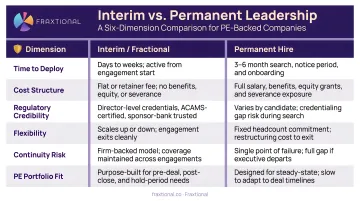
Cost is not just salary. Permanent hires trigger executive search fees of 25–35% of first-year compensation, equity dilution, and severance exposure averaging 30–50+ weeks for C-suite roles. Add 60–90 days of onboarding ramp before any meaningful impact lands. One study puts the true cost of a failed executive hire at up to 213% of annual salary when accounting for team morale and lost productivity.
The table above reflects typical ranges. In practice, the sharper question is not which model costs less — it is which model fits where the company sits in the PE hold period.
What is Interim Leadership for PE-Backed Companies?
Interim leadership involves a fixed-term engagement (typically 3–18 months) where an experienced executive fills a specific role or mandate—CEO, CFO, CRO, CCO—while the firm manages a transition, transformation, or exit process.
The core operational advantage: interim executives enter with no ramp-up expectation. They're hired for immediate execution. This contrasts sharply with permanent hires, who typically spend the first 90 days in orientation and require a full year to reach performance potential.
Four PE-Specific Scenarios Where Interim Leadership Excels
Post-Acquisition Integration: Management gaps need immediate coverage while permanent searches run. Interim leaders can stabilize operations, integrate acquired systems, and maintain continuity with customers and regulators during the critical first 6–9 months.
Turnaround Situations: When revenue or compliance performance declines, interim CROs or CFOs bring specialized turnaround experience without the long-term commitment of a permanent hire. They can make difficult decisions without concern for their own career trajectory within the company.
Bridge Leadership: During permanent CEO or CFO searches that average 90–120 days for C-suite roles, interim executives prevent dangerous leadership vacuums at critical inflection points.
Exit Preparation: Specific functional improvements—cleaning up financial reporting, upgrading compliance infrastructure, or resetting revenue engines—need to be locked in 12–18 months before sale. Interim leaders deliver these defined mandates without the equity discussions that complicate permanent hires near exit.
Cost Structure Advantage
Interim C-suite rates for PE-backed enterprises range from £1,800–£2,500 daily for CFOs and £2,000–£3,500 for CEOs in UK and EU markets. Day rates appear high, but the total engagement cost is often lower than a permanent hire when you factor in zero severance exposure, no equity dilution, and no retained search fee (typically 25–35% of first-year salary).
| Cost Component | Interim CFO (6 months) | Permanent CFO |
|---|---|---|
| Base cost | ~£156,000 (£2,000/day, 3 days/week) | £250,000+ salary |
| Search fee | None | £62,500–£87,500 |
| Equity grants | None | Standard |
| Severance exposure | None | Contractual |
The Key Limitation
Interim leaders are not invested in long-term culture or team development. Their mandate is to deliver defined outcomes and exit. For functions requiring continuity, stakeholder trust-building, or embedded institutional knowledge—building a sales team from scratch, for example, or developing long-term customer relationships—this creates real gaps.
That said, demand for these engagements is growing with more discipline. The global population of fractional executives doubled to over 120,000 in 2024, yet the UK interim market saw days billed fall to 133 in 2024/2025, pointing to a more selective, fit-driven market rather than blanket adoption.
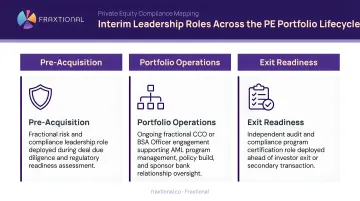
Interim Leadership Use Cases in PE
Understanding where the gaps are helps clarify where interim leadership adds the most value. Lifecycle stage determines optimal interim roles:
- CFO interims during post-close financial integration and reporting standardization
- CRO interims to reset revenue engines and sales processes 12–18 months pre-exit
- Compliance/CCO interims when regulatory deficiencies surface during due diligence or post-acquisition review
Notably, PE/VC client assignments jumped 12% in 2023 to become the top private sector end-client type, indicating a sustained demand pattern, not a temporary response.
What is Permanent Leadership for PE-Backed Companies?
Permanent executive placement in PE context means a full-time, equity-bearing hire designed to lead through the hold period and remain post-exit — signaling management stability to buyers or public markets.
Where Permanent Hires Create Genuine Value
Permanent hires justify the cost and commitment when the work genuinely requires continuity:
- Process infrastructure: ERP implementations, management reporting buildouts, and sales methodology rollouts take 2–4 years to embed properly.
- Management depth: Exit multiples improve when buyers see a capable team below the C-suite. Permanent executives recruit and develop that second leadership layer.
- Stakeholder trust: Regulators, sponsor banks, and key customers prefer relationships built over years. Stable compliance leadership carries more weight than a rotating cast of interim faces.
Key Risks Specific to PE Timelines
The same commitment that makes permanent hires valuable also creates structural risks in PE environments:
Search timelines create exposure. Executive search processes average 3–6 months. A 4-month CFO search during acquisition integration or a pre-exit value creation window represents 10–15% of a typical hold period — gone before the role is filled.
Strategic rigidity is a real cost. Permanent executives may resist pivots the exit thesis demands. An executive hired to build long-term customer relationships often struggles when the sponsor shifts to rapid EBITDA optimization.
Equity structures can misfire. In take-private transactions, changes in executive duties can trigger "good reason" severance clauses and Section 280G golden parachute excise taxes — a 20% penalty on excess payments exceeding 3x historical average compensation. These misalignments quietly pit management incentives against sponsor objectives.
Permanent Leadership Use Cases in PE
Best suited for:
- Platform companies with 4–7 year holds and stable growth strategies
- Post-integration phases once chaos has settled (typically 9–18 months post-close)
- Buyer-mandated continuity when deal terms explicitly require management stability
The talent market reality complicates the picture. Roughly half of PE-backed CFOs have been in their position for two years or less. For context, departing S&P 1500 CEOs average 8.5 years in the role — PE tenure is a fraction of that. "Permanent" rarely means the full hold period.
Interim vs. Permanent Leadership: How to Choose the Right Model
Two variables drive the decision: urgency and phase within the PE lifecycle, and whether the role requires embedded continuity or defined-outcome execution.
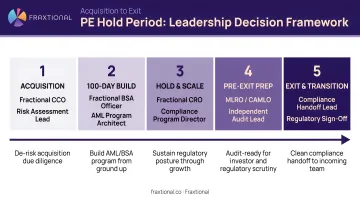
Lifecycle-Mapped Recommendations
Post-Acquisition (0–6 months): Favor interim for gap-filling and integration leadership. The priority is stabilizing operations, standardizing reporting, and identifying permanent leadership needs. Long-term relationship-building comes later.
Growth/Scaling Phase (6 months–3 years): Consider permanent for operational functions requiring team development. Once the business is de-risked and strategy is clear, roles like COO, VP Sales, or Head of Product benefit from continuity and cultural embedding.
Pre-Exit (12–18 months before planned exit): Favor interim for targeted value creation and exit readiness mandates. Fractional or interim CEOs are often inserted 12–18 months pre-exit to professionalize reporting, sharpen the investment narrative, and stand shoulder-to-shoulder with bankers. These executives can articulate the company's growth story to buyers and build the diligence-ready KPIs that close deals faster.
Role-Specific Guidance
The right model varies by function:
- Operational and revenue roles (CEO, CRO, COO): favor permanent once the business is de-risked — building sales teams, customer success processes, and product roadmaps demands sustained leadership and team trust
- Compliance, risk, and regulatory roles: interim or fractional models work well here, since mandates are often defined by regulatory timelines rather than multi-year organizational growth
- Integration and transformation roles: interim wins almost every time — these are defined-outcome mandates with natural endpoints
The Hidden Decision Driver: Cultural Fit and Board Dynamics
Most PE firms underweight this factor. An interim executive who misreads the organization's change tolerance, pushing too fast in a consensus-driven culture or moving too slowly in a turnaround, can create more friction than the leadership gap they were brought in to solve.
Cultural agility and PE experience matter as much as functional credentials. Six out of 10 CEO replacements happen during the first year — most traced back to misalignment that only surfaced after the first full performance cycle.
Practical Decision Heuristic
If the mandate is defined, the timeline is compressed, and the priority is execution over relationship-building — interim wins.
If the mandate requires multi-year continuity, stakeholder trust, and team development as core deliverables — permanent is the right bet.
Beyond the Binary: When Fractional Leadership Is the Smarter Choice
Fractional leadership represents a genuinely different third option that many PE firms underutilize. Unlike interim (full-time, time-limited) or permanent (full-time, ongoing), fractional leaders provide director-level expertise on a part-time, sustained engagement basis—delivering strategic oversight without the full cost burden.
Why Fractional Excels for Compliance and Regulatory Leadership
Functions like Chief Compliance Officer, BSA Officer, MLRO (Money Laundering Reporting Officer), and CAMLO (Chief Anti-Money Laundering Officer) require sustained regulatory expertise and relationships with sponsor banks and regulators, but rarely justify a full-time executive salary at early-to-mid-stage companies.
The numbers make this concrete: public company CCOs average $419,000 annually, with private company CCOs near $300,000. BSA Officers average $89,973 annually.
For a Series A fintech with 15–30 employees, a full-time CCO represents 3–5% of total headcount — significant fixed cost when the compliance workload doesn't yet justify full-time dedication.
Fractional fills this gap by providing daily access to deep compliance experience at a fraction of the cost. A fractional CCO working 2–3 days per week delivers strategic oversight, regulatory representation, and policy development for 40–60% of full-time cost, with zero equity dilution or severance exposure.
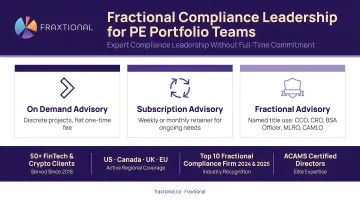
How Fraxtional Serves PE-Backed Portfolio Companies
Fraxtional delivers fractional CCO, CRO, BSA Officer, CAMLO, and MLRO services specifically for PE-backed fintech and crypto portfolio companies. Every engagement is director-led — meaning named, accountable leadership who can be officially designated in regulatory filings, sponsor bank documentation, and audit reports.
Unlike traditional consultants who advise from the sidelines, Fraxtional Directors work as part of your team. They take full personal and legal responsibility for their designated role, deploy within days or weeks, conduct rapid risk assessments to surface urgent compliance gaps, and maintain sponsor bank relationships during transitions.
Multi-Portfolio Deployment: PE firms conducting pre-deal compliance reviews or managing regulatory risk across a portfolio can deploy Fraxtional across multiple companies simultaneously, multiplying expertise without multiplying executive headcount. This is particularly valuable for:
- Identifying regulatory deficiencies during post-acquisition reviews
- Portfolio-wide sponsor bank relationship management
- Standardizing BSA/AML programs across portfolio companies
- Upgrading compliance infrastructure ahead of exit
The Exit Readiness Angle
That speed and cost efficiency matters most when a PE firm is approaching exit. Sponsor banks and institutional buyers increasingly scrutinize compliance infrastructure as a diligence item, and a fractional leader already embedded in the business is far easier to present than one hired weeks before close.
The Federal Reserve, FDIC, and OCC issued final guidance in 2023 placing banks on the regulatory hook for fintech partner compliance, forcing sponsor banks to strictly audit CIP/KYC, due diligence, and OFAC screening processes.
Regulatory enforcement is aggressive. FinCEN imposed an unprecedented $80 million penalty on a broker-dealer for AML failures in March 2026, and the SEC charged a firm and former leadership $51 million combined for misleading investors about AML compliance following crypto failures.
A fractional compliance leader who has built BSA/AML programs, navigated UDAAP requirements, and established sponsor bank relationships adds measurable exit value — and is significantly faster and cheaper to deploy than a permanent CCO search that consumes 3–6 months and 25–35% in search fees.
Frequently Asked Questions
What is the difference between interim and fractional leadership?
Interim leadership is typically full-time and short-term (3–18 months), focused on a specific mandate like turnaround or integration. Fractional leadership is part-time but ongoing, providing sustained director-level expertise at lower commitment levels. Both differ from permanent in cost structure and flexibility, with no severance exposure or equity dilution.
When should a PE-backed company hire permanently rather than use interim leadership?
Permanent hires make most sense when the role requires multi-year continuity, deep team development, or sustained stakeholder relationships. That's typically during stable growth phases of longer hold periods (years 2–5), not during post-acquisition integration or pre-exit windows where execution speed and defined outcomes matter more than relationship-building.
How long do interim executive engagements typically last at PE-backed companies?
Typical durations range from 3–18 months, with the average at 9.5 months. Post-acquisition integrations often run 6–9 months, exit preparation engagements span 6–18 months, and turnaround mandates can be shorter if performance recovery is achieved early. Fractional roles may extend longer given their part-time, sustained nature.
What are the most common interim roles deployed in PE portfolio companies?
CFO, CEO, CRO, CCO/Compliance, and Chief Transformation Officer are most frequently deployed. CFO and compliance roles see the highest demand growth, particularly in PE-backed fintech and regulated industries where sponsor bank relationships and regulatory infrastructure directly impact exit valuation and deal timing.
Does using an interim executive signal instability to potential buyers during exit?
Sophisticated buyers understand interim leadership in PE contexts. What matters is whether the mandate was achieved and whether continuity of critical functions is in place. Interim CEOs are frequently deployed 12–18 months pre-exit to professionalize reporting and maximize valuation—buyers view this positively when executed well.
How should PE firms structure accountability for interim executives to maximize results?
Establish clearly defined KPIs at engagement start, implement a 30/60/90-day milestone framework, and assign direct reporting to the operating partner or board sponsor. Open-ended mandates without measurable outcomes are the primary cause of underperforming interim engagements. Treat interim executives as accountable leaders, not advisors—they should own decisions and be measured on results, not activity.